The inaugural Health Sciences Summer Experience (HSSE) brought students preparing to enter 10th grade from school districts across the state to the University of Iowa for hands-on learning, college exploration, and career discovery, with the goal of strengthening Iowa’s future health care workforce.
The weeklong residential program, which took place July 12-17, welcomed 70 students from 12 Iowa GEAR UP partner school districts. Supported by the university’s P3 Strategic Plan Implementation Fund, the program is a collaboration among the health sciences colleges, the Office of the Provost, and GEAR UP through the Iowa Department of Education.
“The most meaningful outcome of the Health Sciences Summer Experience wasn’t just that students learned about health care careers. It was seeing them begin to imagine themselves in those careers,” says Laura Kowalski-Bliss, HSSE program coordinator.
Students engaged in procedures, skills, and problem-solving experiences tied to a variety of health science careers, and explored how technology, innovation, and research contribute to patient care and disease prevention.
GEAR UP School Districts
Thirteen school districts in Iowa participate in the federally funded GEAR UP (Gaining Early Awareness and Readiness for Undergraduate Programs) initiative, which helps underserved students prepare for and succeed in college through academic, career, and family support services.
12 of the 13 school districts participated in the HSSE: Burlington, Cardinal, Centerville, Clinton, Columbus, Davenport, Davis County, Des Moines, Fort Dodge, Marshalltown, Saydel, and South Tama.
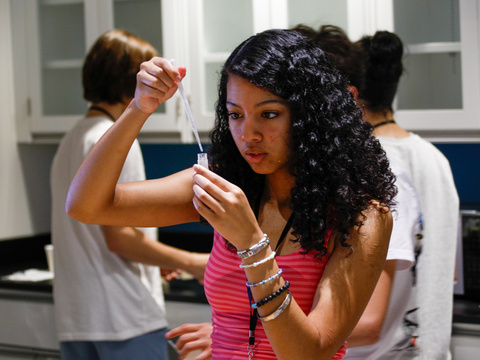
The experience connected participants with faculty, staff, student mentors, and health professionals from the Carver College of Medicine, the colleges of Dentistry, Engineering, Nursing, Pharmacy, and Public Health, along with campus partners including the Academic Advising Center, Division of Student Life, Office of Admissions, Pathways to Excellence, Pomerantz Career Center, and Honors.
Students left the program with knowledge of different health science careers and the next steps they could take to achieve their goals. Many students identified plans to pursue anatomy and psychology coursework, Certified Nursing Assistant (CNA) certification, job shadowing, hospital volunteering, and dual enrollment opportunities.
Students also highlighted the value of experiencing college firsthand while connecting with health professionals and undergraduate students who are pursuing health science careers.
96%
79%
200+
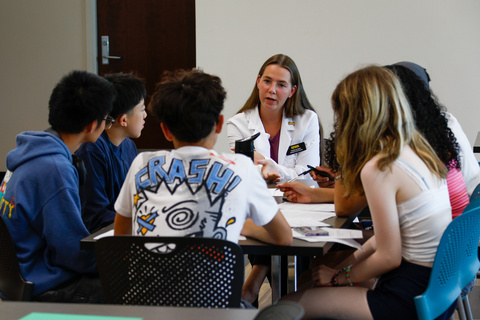
“My absolute favorite part of the program was going to all of the separate colleges and talking to people with experience in the field,” wrote Ella Smith of Des Moines. “It felt like everyone cared about our future and wanted us there learning.”
Mentor observations echoed these comments, with many noting that the students demonstrated increased confidence, participation, teamwork, and peer connection throughout the week. By the end of the program, mentors said students were confidently presenting capstone projects, supporting each other, and navigating campus more independently.
“We watched students build confidence, form meaningful connections, step outside their comfort zones, and discover new possibilities for their futures,” said Kowalski-Bliss. “That growth and sense of possibility is exactly what this program is designed to create.”
The HSSE, which is funded through summer 2028, will continue working with schools and university partners, and will measure whether it helps students prepare for college, pursue health careers, and eventually become health care professionals in Iowa.